
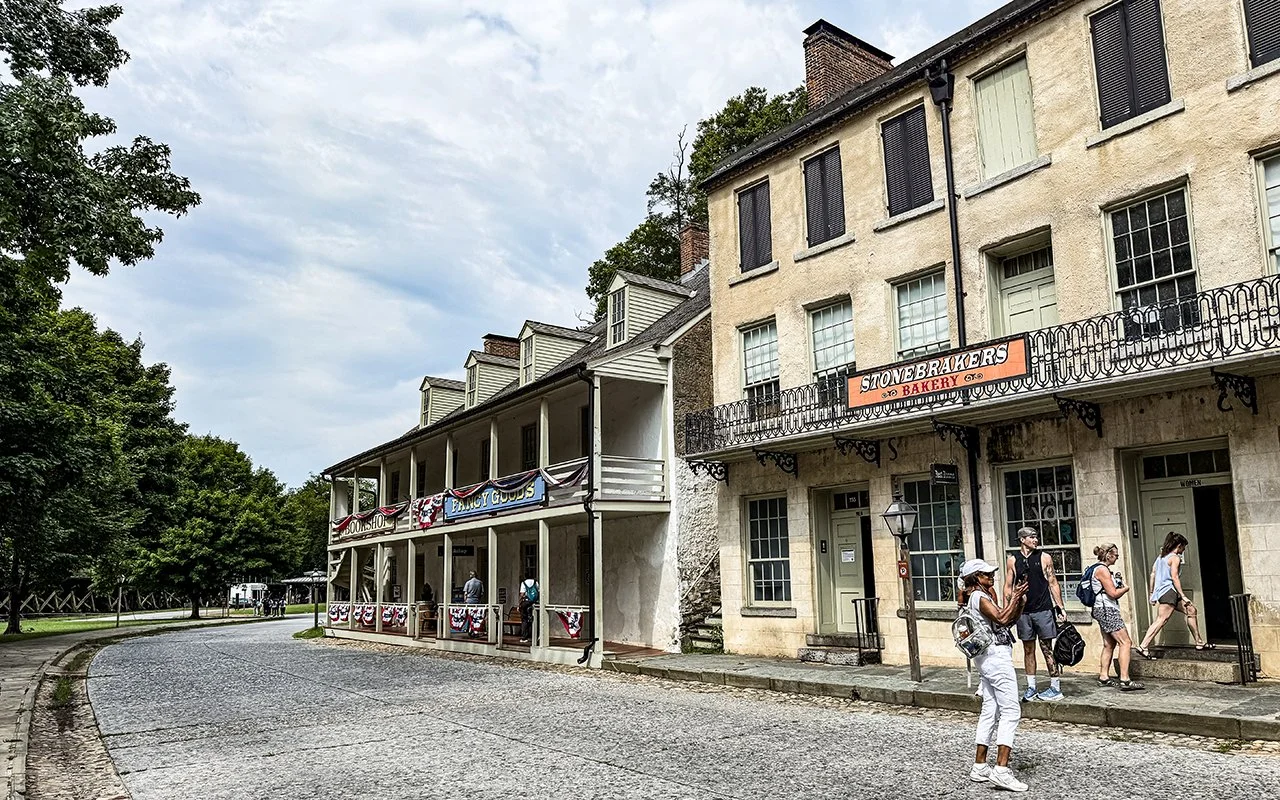
To be honest, Dave and I were only looking for a short hike and a diversion from the day’s drive. Harper’s Ferry National Historical Park, with its deep roots in American history, offered so much more. One could easily spend the entire day here, and we were barely scratching the surface. There are also plenty of hiking trails to choose from—the town being the proverbial midpoint of the Appalachian Trail.
However, with Luci in tow, our opportunities were limited. Although the park is pet-friendly, pets aren’t allowed in buildings or on the shuttle. Determined to make the most of our visit, we chose the 1.6-mile trail to Lower Town, which took us to one of the park’s most popular sites.
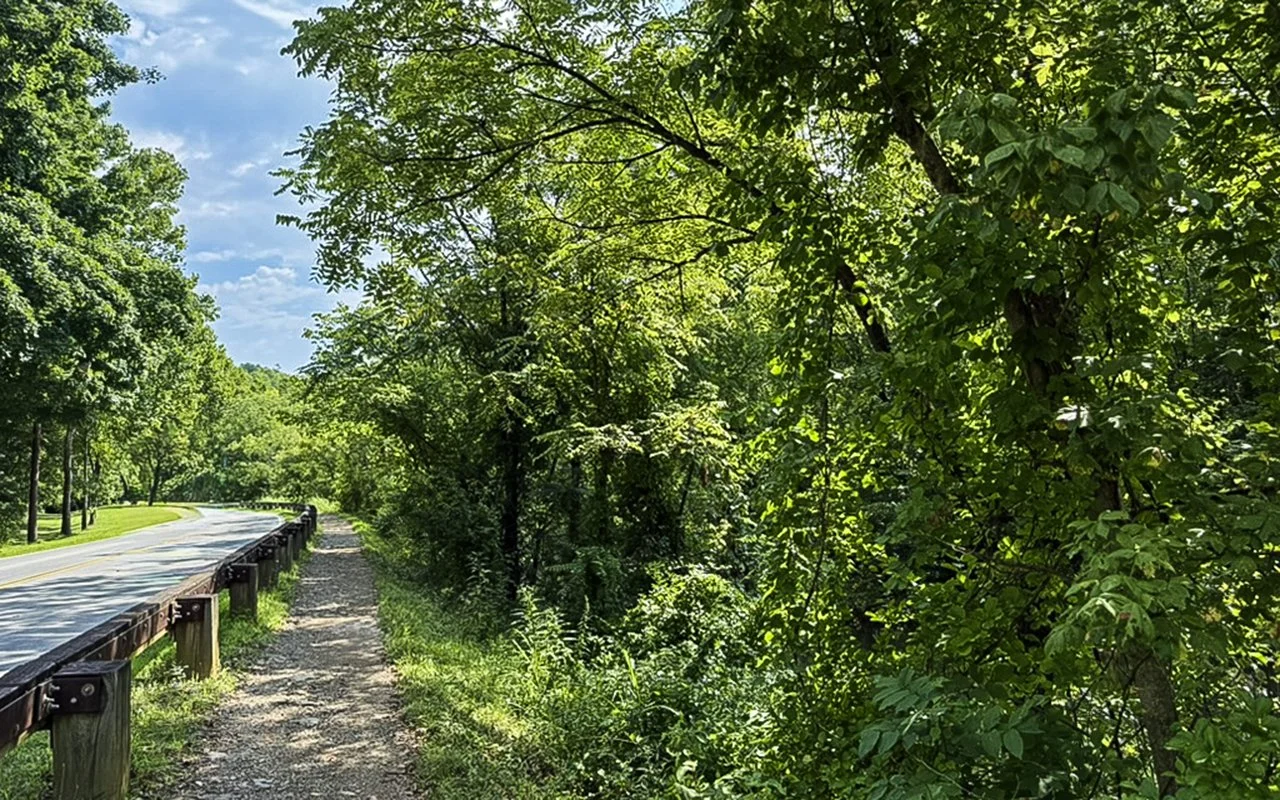
The trail to Lower Town.
In our haste to get started, Dave and I neglected to bring water or wear hiking shoes (what were we thinking?). Fortunately, only the shoes suffered. Despite the heat— 95°F—we pushed forward. The trail descended quickly through the trees, then flattened out once we reached the road. We had the trail mostly to ourselves, only passing a few others with—you guessed it—dogs.
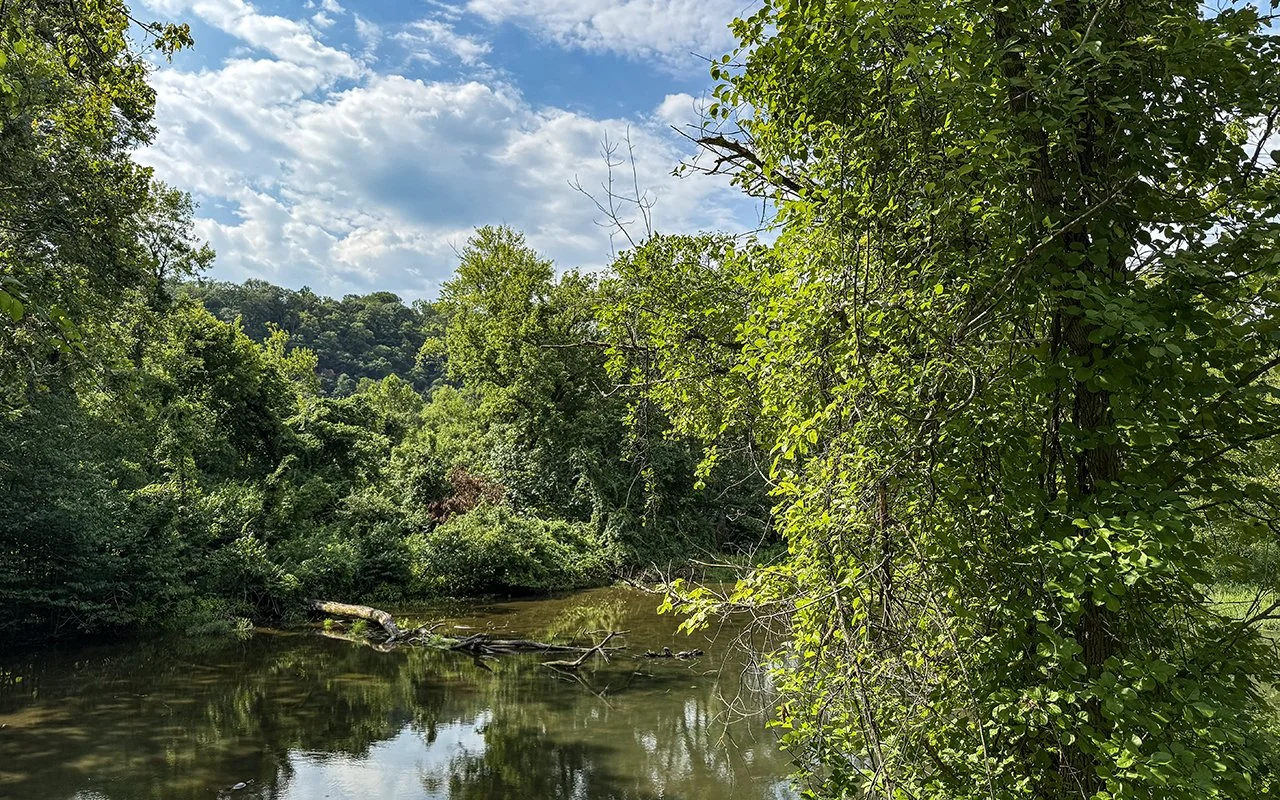
Views from the trail.
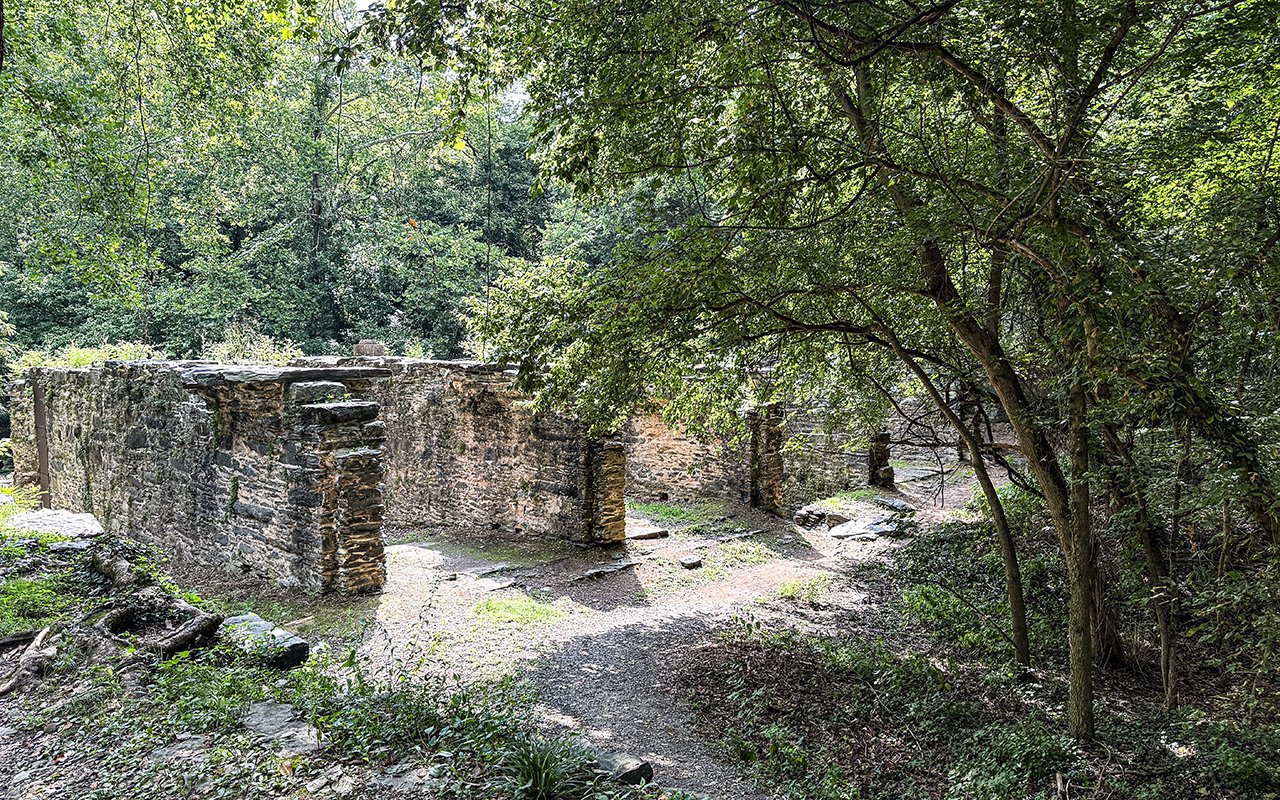
Industrial remnants.
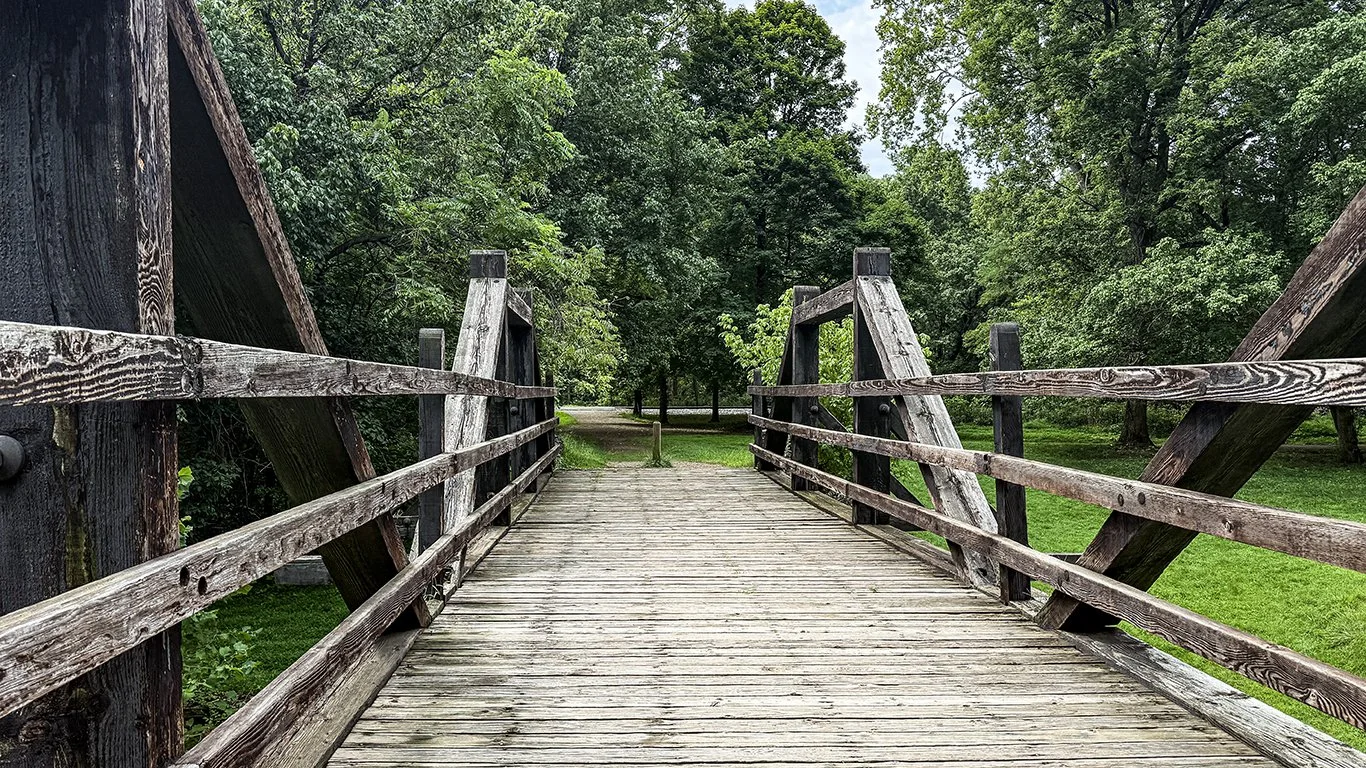
Historical access bridge for residents and workers, used during flooding or severe storms.
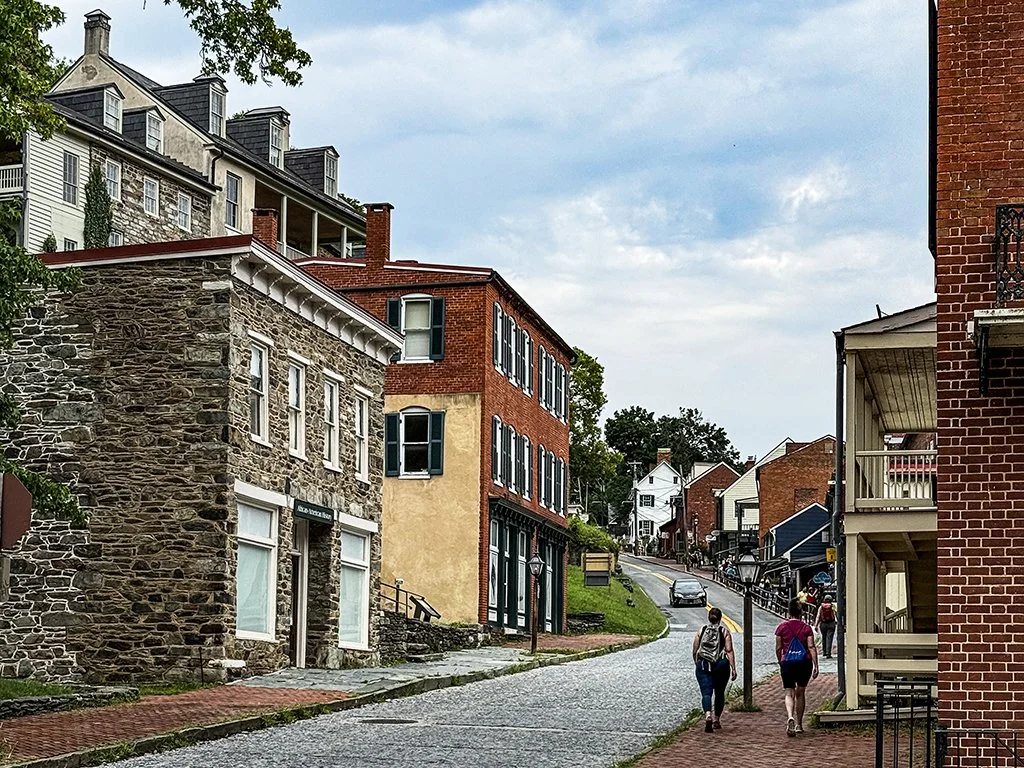
Lower Town.
It’s been many years since I brushed up on U.S. history. Harper’s Ferry, WV, is no exception. The United States Armory and Arsenal was established here in 1799 under President Jefferson. Arms and artillery manufacturing transformed a small village into an industrial hub, at times employing over 400 workers. The town was also the site of the first American Railroad.
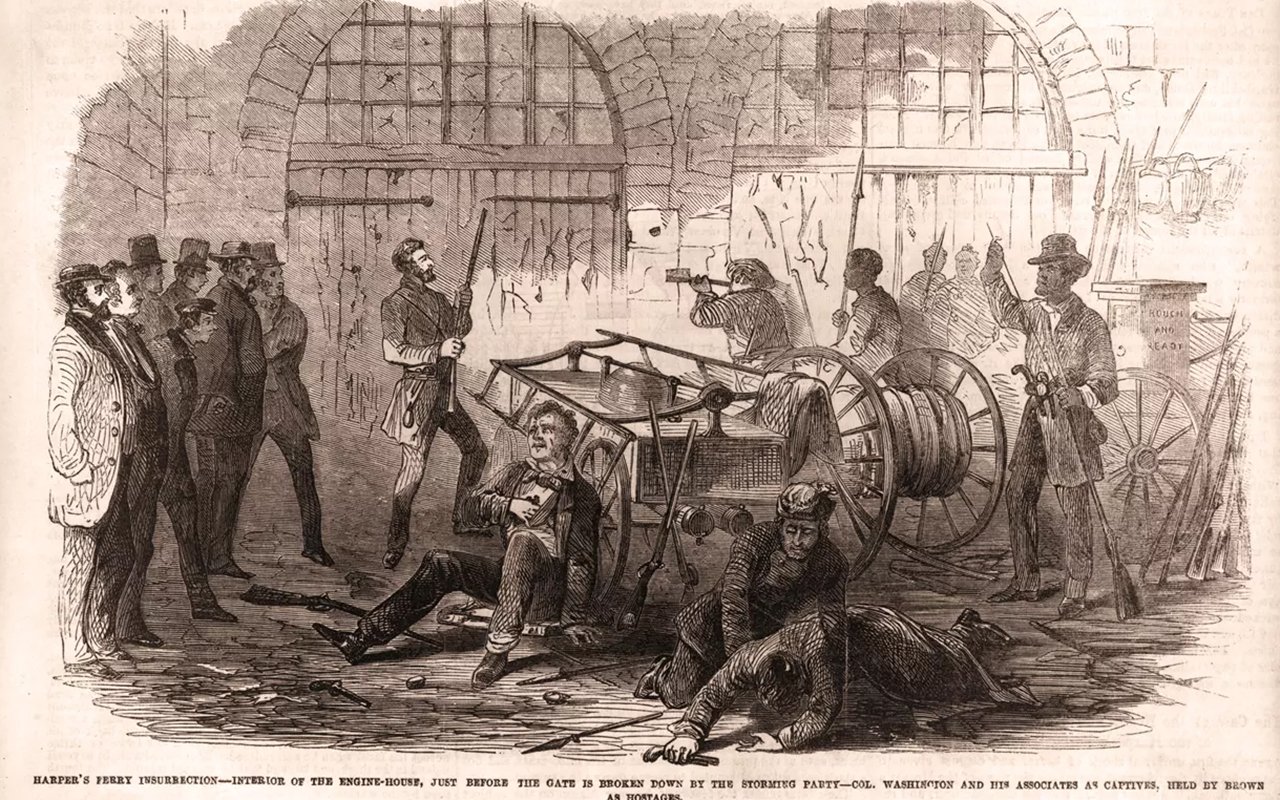
Most notable was John Brown’s 1859 raid on the National Armory and Arsenal. This 30-hour siege for emancipation deeply divided the country and helped catapult the nation into the Civil War. John Brown’s fight for freedom was integral to Harper’s Ferry becoming a National Historical Park.
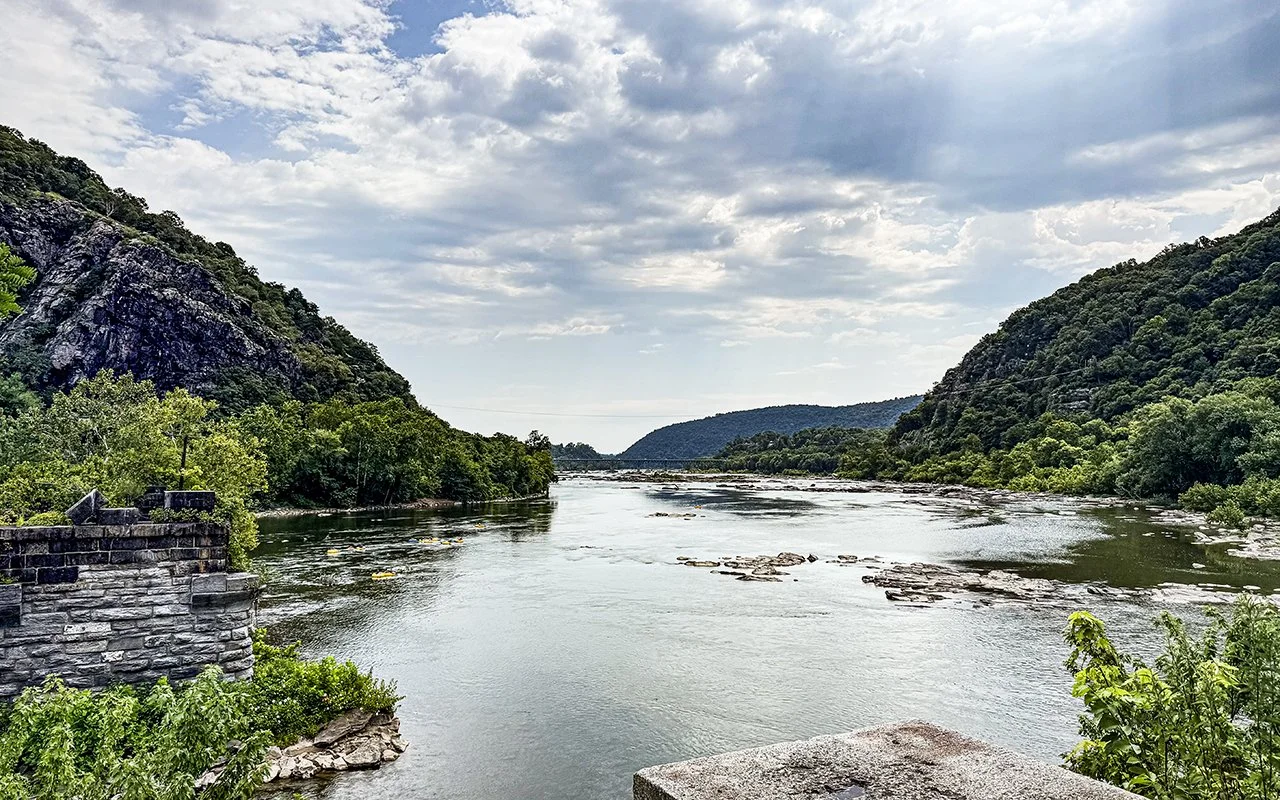
This is where the Shenandoah and Potomac rivers become one.
Once in Lower Town, we headed towards the confluence—where the Shenandoah and Potomac rivers meet. Then, as luck would have it, it began to rain. Not a sprinkle, mind you—a big, sloppy, unrelenting downpour. There was nowhere to go but up. By the time we reached the parking lot, the sky had cleared, but we were soaked beyond recognition. Dave’s wallet took two days to dry out on the car’s dash. Thanks to pervasive humidity, our shoes and Luci’s harness took much longer.
We spent the night in Fishkill, NY, with dreams of possibly following the Freedom Trail in Boston. Craggy coastlines, lobster rolls, and lighthouses were well within our grasp.
Wait a minute, did someone mention something about a heat dome?